 info@yousantape.com
 +86-19168575370
 English
 Arabic
 Bengali
 Chinese (Simplified)
 Dutch
Dutch French
 German
 Hindi
Hindi Indonesian
 Italian
 Portuguese
 Russian
 Spanish
 Thai
Thai Vietnamese


Having worked in the release material industry for years, I’ve seen countless reworks caused by improper use or material defects—release film that peels off too easily, release paper that leaves residue, uneven release force, or even damage during processing. Release film and release paper are essential auxiliary materials in industries like adhesive products, electronic components, screen printing, and packaging. They may seem simple, but their performance directly affects the efficiency of the entire production line and the quality of finished products.
Many colleagues focus only on price or basic specifications when choosing release materials, ignoring the core pain points: compatibility with adhesives, stability of release force, resistance to high temperature and humidity, and adaptability to different processing processes. This blog won’t fill pages with empty theoretical parameters. Instead, I’ll share the most common problems we encounter in daily production, break down their root causes, and provide practical, actionable solutions—all based on real operational experience. Whether you’re new to the industry or a seasoned professional, this guide will help you avoid pitfalls and improve production efficiency.
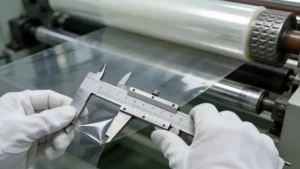
1. Common Problems with Release Film and Their Solutions
Release film is widely used in electronic pasting, die-cutting, and screen printing. Its main function is to isolate adhesives and protect the surface of products. The most frequent problems we encounter are uneven release force, film tearing, and residue after peeling.
1.1 Uneven Release Force (Too Sticky or Too Easy to Peel)
Phenomenon: When peeling the release film from the adhesive product, you’ll find that some parts are too tight (requiring excessive force, even tearing the adhesive layer), while others are too loose (peeling off accidentally during processing). This inconsistency often leads to rework or scrapping of finished products, especially in high-precision die-cutting scenarios.
Root Causes: First, the coating of the release agent is uneven—either too thick in some areas or too thin in others. This usually happens due to unstable coating equipment or improper adjustment of the release agent viscosity. Second, the release agent itself is of poor quality or incompatible with the adhesive used. For example, using a silicone-based release agent with a polyurethane adhesive may cause mismatched release force. Third, the storage environment is not controlled—high temperature or humidity can cause the release agent to migrate or degrade, changing its performance.
Practical Solutions:
– Check the coating equipment regularly: Calibrate the coating roller to ensure uniform release agent application, and adjust the viscosity of the release agent to the optimal range (usually 100-300 mPa·s, depending on the film thickness). If the coating is uneven, clean the coating head and replace worn parts in time.
– Choose the right release agent: Match the release agent type to the adhesive—silicone-based release agents are suitable for most pressure-sensitive adhesives, while fluorine-based release agents are better for high-temperature or special adhesive scenarios. Test small samples first to ensure compatibility.
– Control the storage environment: Store release film in a cool, dry warehouse with a temperature of 15-25℃ and relative humidity of 40%-60%. Avoid direct sunlight or contact with corrosive substances, which can damage the release layer.
1.2 Release Film Tearing Easily During Processing
Phenomenon: The release film tears during die-cutting, pasting, or peeling, leaving fragments on the adhesive or product surface. This not only affects production efficiency but also increases the risk of product contamination, especially in electronic component processing where cleanliness is critical.
Root Causes: The most common reason is insufficient film toughness—either the base material (such as PE, PET) is too thin (less than 0.02mm) or of poor quality. Another cause is improper processing parameters: excessive tension during die-cutting or uneven pressure from the roller can cause the film to tear. Additionally, if the release film is stored for too long (more than 6 months), its toughness may degrade due to aging.
Practical Solutions:
– Choose the right film thickness and base material: For general processing, select release film with a thickness of 0.03-0.05mm; for high-tension scenarios (such as large-area die-cutting), choose thicker film (0.05-0.08mm) with high toughness (like PET base material). Avoid using ultra-thin film unless necessary.
– Adjust processing parameters: Reduce the tension of the release film during processing, and ensure the roller pressure is uniform. For die-cutting, choose a sharp die and adjust the cutting depth to avoid excessive force on the film.
– Control the storage period: Use release film within its shelf life (usually 6-12 months). If stored for a long time, inspect the film for brittleness before use—if it tears easily when folded, discard it.
1.3 Residue Left After Peeling the Release Film
Phenomenon: After peeling the release film, a thin layer of release agent or film residue remains on the adhesive or product surface. This residue affects the adhesion of the next process (such as pasting other components) and may even cause product failure, especially in electronic and medical product applications.
Root Causes: This problem is mostly caused by poor release agent quality or improper coating. Low-quality release agents may have poor adhesion to the film base, leading to transfer during peeling. If the release agent is applied too thick, excess agent may accumulate on the surface and leave residue. Additionally, if the adhesive is too strong or the peeling speed is too fast, the release layer may be torn and left behind.
Practical Solutions:
– Use high-quality release agents: Choose release agents with good adhesion to the film base and no transfer. Avoid cheap, low-purity release agents that are prone to residue.
– Control the coating thickness: Ensure the release agent is applied evenly and in the right amount—too thick or too thin can cause problems. Use a coating thickness tester to monitor and adjust regularly.
– Adjust the peeling speed: Peel the release film at a uniform, moderate speed (usually 0.5-1m/min). Avoid rapid peeling, which can cause the release layer to break and leave residue.
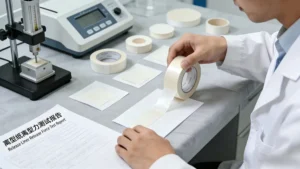
2. Common Problems with Release Paper and Their Solutions
Release paper is often used in pressure-sensitive adhesives, labels, and packaging. Compared with release film, it has the advantages of low cost and good rigidity, but it also has unique problems such as paper dust, uneven release, and moisture absorption.
2.1 Paper Dust Generated During Peeling
Phenomenon: When peeling the release paper from the adhesive, small paper fibers or dust are generated, which adhere to the adhesive surface. This is a common problem, especially with low-quality release paper, and it can seriously affect the cleanliness of the product, especially in precision electronic and medical fields.
Root Causes: The main reason is the poor quality of the base paper—low fiber strength, loose structure, or insufficient surface treatment. When the release paper is peeled, the fibers on the surface are easily torn off, forming paper dust. Additionally, if the release agent is not evenly coated, the adhesion between the release layer and the base paper is uneven, leading to partial fiber detachment during peeling.
Practical Solutions:
– Choose high-quality base paper: Select release paper with dense fiber structure and high strength (such as wood pulp base paper). Avoid low-grade base paper with loose fibers.
– Strengthen surface treatment: Choose release paper with a coated surface (such as PE-coated release paper), which can reduce paper dust by isolating the fiber layer from the release layer.
– Control the peeling environment: Keep the processing workshop clean and reduce dust. Use an air purifier if necessary, and avoid processing in a dry environment (which can increase paper dust).
2.2 Moisture Absorption and Deformation
Phenomenon: Release paper absorbs moisture in a humid environment, leading to deformation (warping, curling) or uneven thickness. This affects the accuracy of die-cutting and pasting, and may even cause the release paper to be unfit for use.
Root Causes: Paper is a hydrophilic material, so it’s prone to absorbing moisture if the storage or processing environment is too humid. Low-quality release paper with insufficient moisture-proof treatment is more likely to have this problem. Additionally, if the release paper is stored in a place with large temperature and humidity changes, it will expand and contract, leading to deformation.
Practical Solutions:
– Control the environment: Store and process release paper in a dry environment with relative humidity of 40%-60%. Avoid storing it near water sources or in damp areas.
– Choose moisture-proof release paper: For humid environments or long-term storage, select release paper with moisture-proof coating (such as PE-coated or aluminum-plated release paper), which can effectively isolate moisture.
– Preprocess before use: If the release paper is slightly deformed due to moisture absorption, place it in a dry environment for 24 hours to restore its flatness before processing.
2.3 Uneven Release Force and Difficult Peeling
Phenomenon: Similar to release film, release paper may have uneven release force—some parts are too tight to peel, while others peel off too easily. In severe cases, the release paper may tear during peeling, or the adhesive may stick to the release paper, causing product scrapping.
Root Causes: The main causes are uneven release agent coating, poor compatibility between the release agent and the adhesive, or aging of the release paper. Unlike release film, release paper’s base material is porous, so the release agent may penetrate into the paper fibers, leading to uneven release force if the coating is not controlled properly.
Practical Solutions:
– Optimize the coating process: Ensure the release agent is evenly coated on the surface of the release paper, and avoid excessive penetration into the paper fibers. Use a coating machine with precise control to adjust the coating amount.
– Match the release agent and adhesive: Test the compatibility between the release paper and the adhesive before mass production. For strong adhesives, choose release paper with high release force; for weak adhesives, choose low release force to avoid accidental peeling.
– Avoid aging: Store release paper in a cool, dry environment and use it within the shelf life. Aging release paper will have reduced release performance, leading to difficult peeling.
3. Practical Tips to Avoid Common Problems (From Years of Experience)
After dealing with these problems countless times, I’ve summarized three key tips to help you reduce rework and improve efficiency. These are not theoretical suggestions—they’re what we actually use in daily production.
1. Test small samples first: Never buy large quantities of release film or paper without testing. Take a small sample and simulate your actual processing process (peeling, die-cutting, pasting) to check the release force, residue, and toughness. This small step can save you from huge losses caused by improper material selection.
2. Pay attention to storage details: Most problems (moisture absorption, aging, release agent migration) are related to improper storage. Keep the warehouse clean, dry, and at a stable temperature. Avoid stacking release materials too high, which can cause pressure deformation.
3. Don’t just chase low prices: Low-cost release materials often have hidden problems—uneven coating, poor quality base material, or inferior release agent. Choosing high-quality materials may cost a little more, but it can reduce rework rates and improve production efficiency, which is more cost-effective in the long run.
4. Final Thoughts
Release film and release paper may be auxiliary materials, but they play a crucial role in the production process. The key to avoiding problems is not to rely on theoretical parameters, but to understand your own processing needs, choose the right materials, and pay attention to details in storage and processing.
There’s no “one-size-fits-all” release material—what works for screen printing may not work for electronic die-cutting, and what’s suitable for a dry environment may not be suitable for a humid one. By understanding the common problems and their solutions, and combining with your actual production scenarios, you can choose the right release film and paper, avoid pitfalls, and improve the quality and efficiency of your products.
If you have specific problems (such as release materials for a particular industry or processing process), feel free to leave a comment below. I’ll share my practical experience and help you find the best solution.


